
“It’s really appreciated, no that isn’t the right word. It was life-saving for my mom,” shares Belinda.
Belinda’s 86-year-old mother Claire had her first stroke last year prompting a need to move out of her home into an assisted living facility. Claire’s first stop after her hospital stay was a skilled nursing facility. Ten days into her stay there, Claire had a significant second stroke and the facility delayed calling an ambulance.
As she was getting ready to be discharged from her second hospital stay, Belinda wanted to take a more active role in finding her a suitable place to go for recovery and long-term care. Claire suffers from mild dementia and the strokes had increased her confusion. She also was showing symptoms of depression and was no longer able to live on her own.
Belinda found a facility that would accept her mom. “It looked like a a good environment, a place to get better with excellent and outstanding care,” she shared. At that time Claire had 90 days left on Medicare and was making progress in her recovery with physical therapy at the new facility. Surprisingly, the facility determined that Claire didn’t qualify for continued skilled care and they gave Claire notice that Medicare would stop payment. She had two days to move out or pay $700 a day to stay there. She was on oxygen and had no care plan provided for future treatment. Claire suffered her third stroke.
After another hospital stay, Claire was able to return to the facility under Medicare. Belinda spent every day looking at options knowing that her mom’s Medicare payments would soon cease. Her brother applied for the Medicaid program for their mother.
They were informed by the facility that they didn’t accept Medicaid and then later that she would have to wait for a Medicaid bed to open. The facility moved to discharge her quickly again. Claire received a discharge notice but didn’t have final approval from Medicaid yet. Belinda felt that they were trying to get her mother out of the facility before Medicaid kicked in which is not legal under federal and state laws. All skilled nursing facilities that accept Medicare Part A are dually certified as Medicaid beds.
During the Medicaid application process, Belinda and her brother learned they could file an appeal and also contact the Long-Term Care Ombudsman Program, which is operated by Multi-Service Center. Claire reached out and was connected with Jeffrey York, a King County long-term care ombuds.
“Jeffrey was the first person who told us my mom had rights, including having a care plan for any discharge. He shared his past experience with this facility and that all the beds were actually Medicaid-eligible,” shares Belinda. “He offered immediately to talk to the facility on our behalf and took the approach of let’s see if we can get this resolved by talking this through.”
Claire had her assessment for Medicaid and was approved for all costs to be covered at the long-term care facility. Claire and her family finally felt there was some stability; however, things started to change.
“The nursing care is outstanding, the occupational therapy, the physical therapy, everything. The management is only running it for profit,” shares Belinda. “They started to do things to make my mom uncomfortable.”
Management removed the handbook covering the amenities in the long-term care facility from Claire’s room. This handbook shared all the community activities that Claire could participate in to feel a sense of belonging.
Then when Claire took her son to one of the on-site restaurants for a meal and they were told by the manager that Claire was not welcome to eat in that location. The manager told Claire she could only eat in limited locations as others are for paying residents only. “My mom didn’t want to be treated like a different person because she was on Medicaid,” says Belinda. “Hearing that made her feel like they didn’t want her there.”
“I spoke to the resident to get her side of her story and set up a conference with management to go over procedures and WAC (Washington Administrative Code) requirements,” shares Jeffrey. “We were pretty successful and the facility did not move forward with their dining policy as it would be considered discrimination against residents who are on the Medicaid program.” Federal and state laws protect all residents living in licensed care homes from discrimination based on payment source.
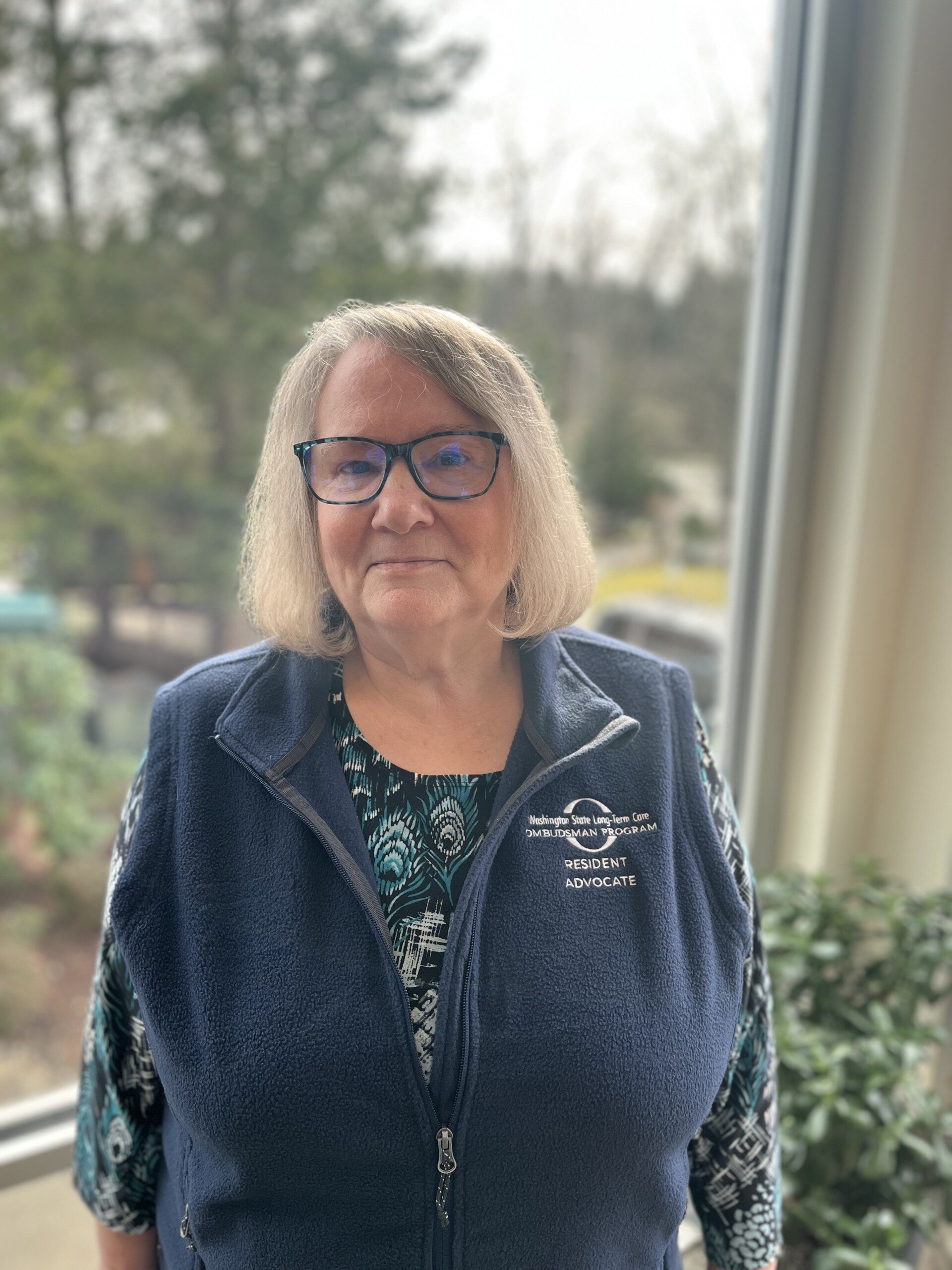
Jeffrey has been serving as a long-term care ombuds for three years and provides advocacy to residents across over 400 facilities in his area. In addition, he provides support and guidance to certified volunteer ombuds who are doing similar work in other facilities.
“I care about the residents and vulnerable individuals in general,” says Jeffrey. “We press the issues to ensure their rights are protected and let the administrators know we aren’t going away. It feels good to advocate on the resident’s behalf and let them know they have someone in their corner.”
Claire suffered a fourth stroke a few months ago and was again presented with papers to sign even though she has dementia. Jeffrey was able to explain the papers to the family and Claire remains at the facility receiving the care she needs and is able to access all the amenities as any resident should.
“Every step of the way Jeffrey has helped us with any issue that has come up,” shares Belinda. “My mom calls Jeffrey her guardian angel.”